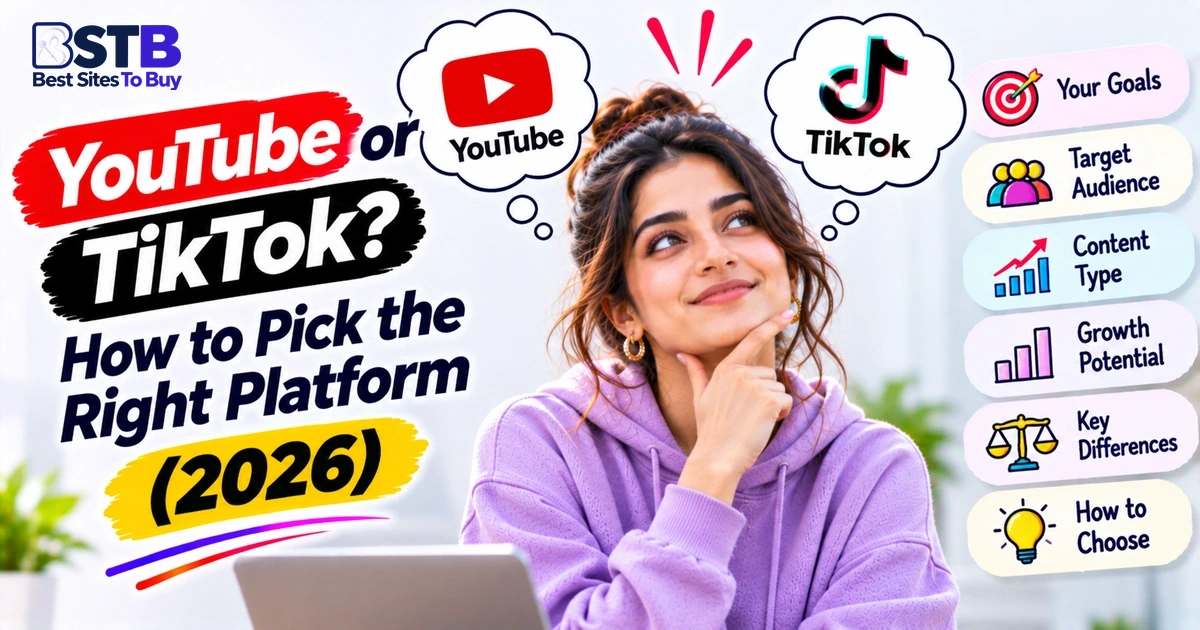
Choose YouTube if you want search traffic, long-lasting videos and higher ad revenue, and choose TikTok if you want fast reach, trend-driven content and quick audience growth. Many creators use both, posting short clips on TikTok and YouTube Shorts while building deeper long-form videos on YouTube.
The right platform depends on your goals, your audience and the kind of videos you enjoy making. This guide compares YouTube vs TikTok on audience, algorithm, monetization, growth and niche fit, so you can pick with confidence.
When I help creators choose between YouTube and TikTok, I ask one question first: do you want quick reach or lasting traffic? That answer usually decides the platform. If you also post on Instagram, our Instagram Story ideas guide shows how to grow there too.
YouTube or TikTok: What Is the Main Difference?
The main difference between YouTube and TikTok is how people use them. YouTube is a search-driven video library where viewers look for tutorials, reviews and long videos, while TikTok is a discovery feed where short, entertaining clips reach new viewers through the For You page.
YouTube videos keep earning views for years because search and suggested videos surface them long after posting. TikTok videos usually peak within days, but they can reach huge audiences fast, even from new accounts. Your goals, time and content style decide which platform fits you better.
| Factor | YouTube | TikTok |
|---|---|---|
| Main use | Search and long-term viewing | Discovery and entertainment |
| Video length | Shorts up to 3 minutes, long videos up to 12 hours (verified) | Mostly short clips, with longer uploads allowed |
| Content lifespan | Months to years | Days to weeks |
| Discovery | Search, suggested videos, home feed, Shorts feed | For You page and TikTok search |
| Monetization | YouTube Partner Program ad revenue | Creator Rewards, LIVE gifts, TikTok Shop |
| Best for | Tutorials, reviews, deep dives | Trends, humor, quick tips |
YouTube vs TikTok Audience: Who Watches Each Platform?
YouTube has a broader audience, with over 2 billion logged-in monthly users across almost every age group, including many adults who watch on TVs. TikTok reports over 1 billion monthly users globally, and its audience skews younger, with Gen Z and millennials as its core viewers.
Pick the platform where your target viewers already spend time. If you serve professionals, parents or buyers researching products, YouTube often works better. If your audience is young and loves trends, humor and fast tips, TikTok usually gives you quicker reach and stronger engagement.
- YouTube audience: all ages, strong on TV screens.
- TikTok audience: younger, mobile-first viewers.
- Search intent: higher on YouTube.
- Trend intent: higher on TikTok.
YouTube vs TikTok Content Format: Long Videos, Shorts and Clips
YouTube supports both long-form videos and Shorts, which can run up to three minutes in a vertical format. TikTok is built around short vertical clips, usually under a minute or two, although it now accepts longer uploads. Both reward strong hooks in the first few seconds.
If you enjoy explaining, teaching or storytelling in depth, YouTube long-form gives you room to build trust. If you prefer quick, punchy ideas, TikTok and YouTube Shorts both fit. Many creators use short clips to attract viewers and long videos to keep them.
- YouTube long-form: tutorials, reviews, vlogs and podcasts.
- YouTube Shorts: vertical clips up to three minutes.
- TikTok videos: trends, quick tips, humor and behind the scenes.
- Editing effort: higher for long YouTube videos.
YouTube vs TikTok Algorithm: How Each Platform Finds Viewers
The TikTok algorithm shows new videos to small test groups on the For You page, then pushes clips with strong watch time, replays and shares to bigger audiences. Followers matter less, so a brand-new account can go viral with a single strong video.
The YouTube algorithm relies on search, suggested videos and the home feed, ranking videos by click-through rate, watch time and viewer satisfaction. Growth is usually slower at first, but optimized titles, thumbnails and keywords keep bringing search traffic to your videos for months or years.
- TikTok signals: watch time, replays, shares and comments.
- YouTube signals: click-through rate, watch time and satisfaction.
- TikTok search: growing, driven by captions and on-screen text.
- YouTube search: titles, descriptions and chapters.
YouTube vs TikTok Monetization: Which Pays Creators More?
YouTube usually pays creators more for views, because long-form videos share 55% of ad revenue with creators and Shorts share 45% of their ad pool. TikTok pays through its Creator Rewards Program for videos longer than one minute, plus LIVE gifts, TikTok Shop and brand deals.
Ad earnings vary widely by niche, country and audience, so treat any RPM figure as a rough guide. On both platforms, the biggest income often comes from sponsorships, affiliate links and your own products, which depend more on audience trust than view counts.
| Program | YouTube | TikTok |
|---|---|---|
| Main program | YouTube Partner Program | Creator Rewards Program |
| Full entry requirements | 1,000 subscribers plus 4,000 watch hours in 12 months or 10 million Shorts views in 90 days | 10,000 followers and 100,000 views in 30 days, age 18+ |
| Revenue model | 55% long-form ad share, 45% Shorts ad pool share | Payouts on qualified original videos over one minute |
| Other income | Channel memberships, Super Thanks, YouTube Shopping | LIVE gifts, TikTok Shop, subscriptions |
YouTube Partner Program Requirements
The YouTube Partner Program has two tiers. The lower tier unlocks fan funding and shopping, while the full tier adds ad revenue sharing on long-form videos and Shorts.
- Lower tier: 500 subscribers, 3 uploads in 90 days, plus 3,000 watch hours or 3 million Shorts views.
- Full tier: 1,000 subscribers, plus 4,000 watch hours or 10 million Shorts views.
- Account needs: no active strikes, 2-step verification and linked AdSense.
TikTok Creator Rewards Program Requirements
The TikTok Creator Rewards Program pays for original videos longer than one minute. Each video needs at least 1,000 For You views to qualify, and Duets and Stitches do not count.
- Followers: at least 10,000.
- Views: 100,000 valid views in the last 30 days.
- Eligibility: age 18+ in a supported country.
YouTube vs TikTok Growth: Which Is Faster for New Creators?
TikTok is usually faster for new creators, because the For You page tests every video with fresh viewers regardless of follower count. YouTube growth is slower at first, but subscribers tend to stay longer and watch more, which builds a steadier, more loyal audience over time.
When I test a new content idea, I post short clips first because quick feedback shows what people want. Ideas that earn strong comments then become longer YouTube videos. This approach saves editing time and helps you grow on both platforms without guessing.
- TikTok: fast reach, shorter attention.
- YouTube: slower start, longer viewer loyalty.
- Posting pace: TikTok rewards frequent posting.
- Consistency: YouTube rewards a steady schedule.
YouTube or TikTok for Business: Which Is Better for Brands?
For businesses, YouTube is better for long-term search traffic, product demos and tutorials that answer buying questions, while TikTok is better for brand awareness, trends and reaching younger shoppers fast. Many brands use TikTok to get noticed and YouTube to explain and convert.
Both platforms offer ads, shopping features and creator partnerships. TikTok Shop lets viewers buy inside the app, while YouTube Shopping links products to videos. Working with niche creators often beats running ads alone, and our influencer directory can help you find them.
- Awareness: TikTok spreads brand content fast.
- Search and education: YouTube answers buyer questions.
- In-app shopping: TikTok Shop and YouTube Shopping.
- B2B brands: YouTube usually fits better.
YouTube or TikTok by Niche: Which Platform Fits Your Content?
Your niche often decides the best platform. Tutorials, tech reviews, finance, gaming and education usually perform better on YouTube, where people search for detailed answers. Comedy, fashion, beauty, dance, food hacks and lifestyle clips often grow faster on TikTok, where entertainment drives discovery.
Some niches work well on both. Fitness, cooking and travel creators can post quick tips on TikTok and full routines, recipes or guides on YouTube. Check what top creators in your niche post, and notice which platform brings them the most comments and saves.
| Niche | Better platform | Why |
|---|---|---|
| Tutorials and how-to | YouTube | Search brings steady views |
| Tech and product reviews | YouTube | Buyers research before purchase |
| Finance and education | YouTube | Depth builds trust |
| Gaming | YouTube | Long streams and walkthroughs |
| Comedy and skits | TikTok | Shareable short humor |
| Fashion and beauty | TikTok | Trends and quick transformations |
| Food and recipes | Both | Quick hacks on TikTok, full recipes on YouTube |
| Fitness | Both | Short tips on TikTok, full workouts on YouTube |
| Travel | Both | Clips on TikTok, detailed guides on YouTube |
How to Choose YouTube or TikTok in 5 Steps
To choose YouTube or TikTok, define your goal, study your audience, match your content style, check your available time and test both before committing. This simple framework turns a confusing choice into a clear decision based on your own data rather than guesses.
Give each test at least four to six weeks of consistent posting before judging results. Track views, watch time, comments and follower growth in a tool like Metricool, then double down on the platform where your content performs best and feels easiest to make.
- Set your goal: income, brand awareness, leads or community.
- Know your audience: age, interests and where they watch.
- Match your style: long explanations suit YouTube, quick clips suit TikTok.
- Check your time: long YouTube videos take more editing.
- Test and measure: post on both for six weeks, then compare.
Can You Post the Same Content on YouTube and TikTok?
Yes, you can post the same short videos on YouTube Shorts and TikTok, as long as you upload clean files without the other platform’s watermark. Small tweaks help, such as native captions, trending sounds on TikTok and keyword-rich titles on YouTube Shorts.
You can also turn one long YouTube video into several TikTok clips. AI tools like Opus Clip, Submagic and Descript find highlights, add captions and resize videos, so one recording can feed both platforms with far less editing work every week.
- Remove watermarks: upload original files.
- Adjust captions: match each platform’s style.
- Schedule posts: use Later or Buffer.
- Track separately: results differ by platform.
YouTube vs TikTok Mistakes to Avoid
The most common YouTube vs TikTok mistakes are choosing a platform only because it is popular, copying trends that do not fit your niche, posting inconsistently and quitting too early. Each platform needs weeks of steady posting before the algorithm understands who your content is for.
Avoid weak first seconds, because viewers on both platforms scroll away fast. Do not ignore titles and thumbnails on YouTube, or captions and on-screen text on TikTok. Finally, never repost watermarked clips, since both platforms may limit their reach and recommendations.
- Following hype: pick based on your goals.
- Weak hooks: grab attention in two seconds.
- Inconsistency: set a realistic schedule.
- Quitting early: test for at least six weeks.
Conclusion: Pick YouTube or TikTok Based on Your Goals
Pick YouTube if you want search traffic, higher ad pay and long-lasting videos, and pick TikTok if you want fast reach, trends and quick audience growth. Many creators do best by starting on one platform, then repurposing clips to the other.
Test your ideas, track results and stay consistent. To find scheduling tools, AI video editors and analytics apps for YouTube and TikTok, explore BestSitesToBuy, where you can compare trusted creator tools in one place.
Frequently Asked Questions
TikTok is usually better for beginners who want fast feedback and quick reach, while YouTube is better for beginners willing to grow slowly toward long-term search traffic and higher ad income. TikTok: new accounts can reach thousands of viewers quickly. YouTube: videos keep earning views for years. Effort: short clips need less editing. If you are unsure, start with short vertical clips and post them on both TikTok and YouTube Shorts. After a few weeks, compare results and focus on the platform where your audience responds most and creating feels natural.
YouTube usually pays more per view, because long-form creators get 55% of ad revenue and Shorts creators share 45% of a Shorts ad pool, while TikTok pays mainly through its Creator Rewards Program. YouTube: ad revenue plus memberships and Super Thanks. TikTok: Creator Rewards, LIVE gifts and TikTok Shop. Both: brand deals often pay the most. Earnings depend heavily on niche, audience location and engagement. Finance and tech channels often earn far more per view than entertainment content. Build multiple income streams, such as affiliate links and sponsorships, instead of relying on ads alone.
Yes, you can use YouTube and TikTok at the same time, and many creators post short clips on both TikTok and YouTube Shorts while saving deeper topics for long YouTube videos and tutorials. Repurpose: one video, two platforms. Clean uploads: remove watermarks before posting. Scheduling: plan posts with one tool. Posting on both spreads your risk if one platform changes its algorithm or rules. Start with a simple weekly plan, such as three short clips and one long video, so you stay consistent without burning out or rushing your editing.
TikTok is generally easier to grow on at first, because the For You page shows videos to new viewers regardless of how many followers you have, while YouTube growth builds slowly through search and suggestions. TikTok: viral potential from day one. YouTube: steady growth that compounds over time. Loyalty: often stronger on YouTube. TikTok followers do not always watch every video, so growth can feel uneven. YouTube subscribers tend to return, which makes each new video easier to promote. Pick the pace that matches your patience and long-term goals.
YouTube Shorts is better if you want short videos to feed a long-form YouTube channel, while TikTok is better for trends, sounds and fast discovery, especially among younger viewers. Shorts length: up to three minutes. Shorts pay: 45% share of the Shorts ad pool. TikTok strength: culture, trends, sounds and community. Shorts viewers can click through to your long videos and subscribe to your channel, which TikTok cannot offer. Many creators post the same clip on both each week and let the results decide where to spend more time.
YouTube is better for businesses that want search traffic, product education and long-term leads, while TikTok is better for brand awareness and reaching younger shoppers quickly with trend-based content. B2B: YouTube tutorials and webinars. Ecommerce: TikTok Shop and creator videos. Local businesses: behind-the-scenes clips work on both. The right choice depends on where your customers spend time and how they buy. Many brands use TikTok to get noticed and YouTube to answer detailed questions that help buyers decide. Test both with a small budget before scaling ads.
On TikTok, most videos work best between 15 seconds and three minutes, while YouTube long-form videos often perform well between 8 and 20 minutes, and YouTube Shorts can run up to three minutes. TikTok: over one minute for Creator Rewards. YouTube long-form: long enough to fully answer the topic. Shorts: quick, looping clips work well. Length matters less than retention. A tight 30-second clip beats a slow two-minute one, and a focused 10-minute video beats a padded 25-minute one. Cut anything that does not serve the viewer or the story.
Yes, you can post a TikTok video on YouTube Shorts, but upload the original file without the TikTok watermark, because both platforms may show watermarked clips to fewer people in the feed. Save originals: keep clean exports. Update captions: add keywords for YouTube search. Check music: some TikTok sounds may not be licensed on YouTube. Edit the first second if needed, since Shorts viewers swipe just as fast. Add a clear title and a few relevant hashtags, and link related long videos so Shorts viewers can discover more of your channel.
No, it is not too late to start on YouTube or TikTok in 2026, because both platforms keep recommending new creators who post useful or entertaining videos consistently in a clear, specific niche. Niche down: specific topics grow faster. Be consistent: steady posting builds trust. Improve: study your analytics every single week. Viewers always want fresh faces, new ideas and better explanations. Instead of competing with huge creators, serve a smaller audience with clear needs. Over time, your library of videos becomes an asset that keeps bringing new viewers and subscribers.
For long-term success, YouTube usually wins, because videos keep getting search traffic for years and long-form ad revenue is stronger, while TikTok is better for fast reach that can feed your YouTube channel. Lifespan: YouTube videos last much longer. Reach: TikTok spreads new ideas quickly. Strategy: use both platforms together. The strongest creator businesses rarely rely on one platform. Build your main home on YouTube or your own website, use TikTok for discovery and grow an email list so you always own a direct line to your audience.
