
Quick answer: Video marketing is the use of video to promote a brand, product or service, educate customers and drive leads and sales. A strong video marketing strategy sets goals for each funnel stage, picks the right video types and platforms, optimizes videos for search, and measures ROI with metrics like watch time, engagement and conversions.
Video marketing has moved from nice-to-have to essential. According to Wyzowl’s 2026 survey, 91% of businesses use video as a marketing tool, and 85% of people say a video has convinced them to buy a product or service.
When I plan video marketing for a brand, I start with one question: what should the viewer do after watching? That answer decides the video type, length, platform and call to action. This guide covers what video marketing is, its benefits, 7 key types, a step-by-step strategy, platforms, SEO, costs, ROI and the AI video tools that make it faster and cheaper.
What Is Video Marketing?
Video marketing is the practice of using video content to promote a brand, product or service, educate an audience and drive actions like sign-ups and sales. It includes social videos, YouTube content, product demos, testimonials, webinars, video ads and videos embedded in emails and websites.
Unlike a single advert, video marketing is an ongoing strategy that supports every stage of the customer journey. A short Reel can build awareness, a tutorial can answer questions, and a testimonial can close a sale. Together, these videos help people understand, trust and choose your brand faster.
- Promote: introduce your brand, products and offers.
- Educate: explain how products work and solve problems.
- Engage: start conversations on social media and YouTube.
- Convert: turn viewers into leads, buyers and loyal customers.
What Is Video Content Marketing?
Video content marketing is the part of video marketing focused on helpful, non-promotional videos, such as tutorials and stories, that attract and nurture an audience instead of selling directly.
- Value first: teach, entertain or inspire viewers.
- Long-term: builds trust and organic reach over time.
- Examples: how-tos, behind-the-scenes and educational series.
Why Is Video Marketing Important in 2026?
Video marketing is important in 2026 because people prefer video to learn about products, platforms reward video with more reach, and video drives measurable results. Wyzowl reports that 82% of marketers say video has given them a good ROI, which explains why budgets keep growing.
Attention is also harder to win. Feeds move fast, and short, engaging videos stop the scroll better than text or static images. Social platforms such as Instagram, TikTok, YouTube and LinkedIn all push video formats, so brands without video lose visibility to competitors who post consistently.
- Audience preference: 63% of people would rather watch a short video to learn about a product.
- Platform priority: social networks give video more reach.
- Proven ROI: most marketers report positive returns.
- Competitive edge: brands without video fall behind.
What Are the Benefits of Video Marketing?
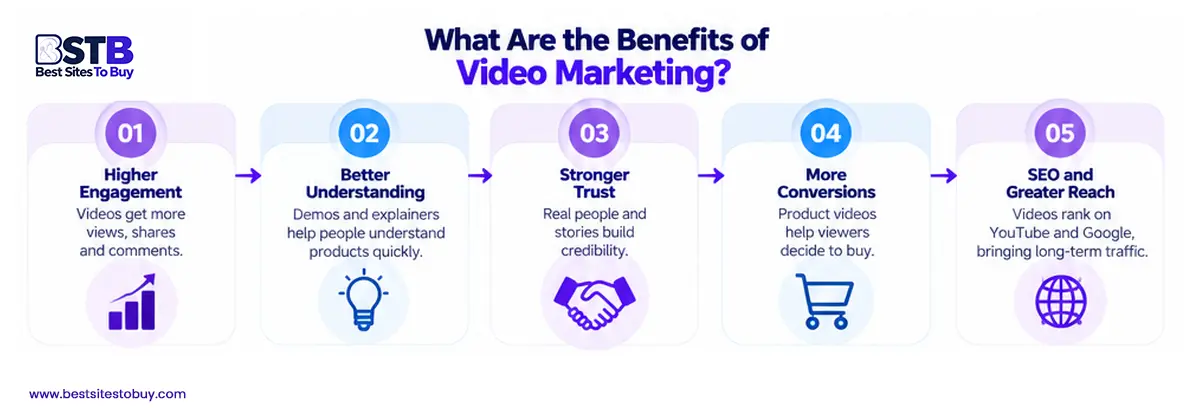
The main benefits of video marketing are higher engagement, better understanding of your product, stronger trust and more conversions. Video combines visuals, sound and emotion, so it explains complex ideas quickly and helps viewers remember your message long after they stop watching.
Video also supports other channels. Videos on landing pages can keep visitors on the page longer, videos in emails can increase clicks, and YouTube videos can bring steady search traffic for years. One well-planned video can be repurposed into Reels, Shorts, blog embeds and ads, multiplying its value.
- Engagement: video earns more watch time, shares and comments.
- Understanding: demos and explainers answer questions fast.
- Trust: faces, testimonials and stories build credibility.
- Conversions: product videos help viewers decide to buy.
- SEO and reach: videos rank on YouTube and Google results.
What Are the Key Video Marketing Statistics for 2026?
The key video marketing statistics for 2026 show that video is mainstream and effective: 91% of businesses use video, 82% of marketers report good ROI, and 85% of people have been persuaded to buy by a video, according to Wyzowl’s latest State of Video Marketing survey.
Length and AI are shaping how teams create video. Wyzowl found 71% of marketers believe videos between 30 seconds and 2 minutes are most effective, and 63% of video marketers have used AI tools to create or edit marketing videos. Short, efficient production is now the norm.
| Video marketing statistic (Wyzowl 2026) | Figure |
|---|---|
| Businesses using video as a marketing tool | 91% |
| Marketers who say video gives a good ROI | 82% |
| People convinced to buy by watching a video | 85% |
| People who prefer a short video to learn about a product | 63% |
| Marketers who say 30 seconds to 2 minutes is the most effective length | 71% |
| Video marketers who have used AI video tools | 63% |
- Adoption: almost every business now uses video.
- Results: strong ROI keeps budgets growing.
- Length: short videos under 2 minutes perform best.
- AI: most video marketers now use AI tools.
What Are the Different Types of Video Marketing?
The main types of video marketing are explainer and product demo videos, testimonials and case studies, how-to and educational videos, brand story and behind-the-scenes videos, webinars and live videos, short-form social videos and UGC, and video ads. Each type serves a different goal.
Choosing the right types of marketing videos depends on where viewers are in the funnel. Short social videos and ads build awareness, tutorials and webinars help with consideration, while demos and testimonials push conversions. Most brands mix several types in one video marketing plan.
- Awareness: short-form social videos, brand stories and ads.
- Consideration: how-tos, explainers and webinars.
- Conversion: product demos, testimonials and case studies.
- Loyalty: onboarding, tips and behind-the-scenes content.
What Are Explainer and Product Demo Marketing Videos?
Explainer and product demo marketing videos show what your product does and how it solves a problem. They work well on landing pages, product pages and in sales emails.
- Explainer: a simple, often animated overview of your offer.
- Demo: a real walkthrough of features in action.
- Best length: 60 to 120 seconds.
What Are Testimonial and Case Study Marketing Videos?
Testimonial and case study marketing videos let happy customers tell your story. Real faces and specific results build trust faster than any claim your brand can make itself.
- Testimonial: a short customer quote on camera.
- Case study: a problem, solution and measurable result.
- Best use: sales pages, ads and LinkedIn.
What Are How-To and Educational Marketing Videos?
How-to and educational marketing videos teach viewers a skill or solve a problem. They attract search traffic, earn saves and position your brand as a helpful expert in its industry.
- Tutorials: step-by-step guides related to your product.
- Tips: quick advice in 30 to 60 seconds.
- Series: recurring lessons that build an audience.
What Are Brand Story and Behind-the-Scenes Marketing Videos?
Brand story and behind-the-scenes marketing videos show the people, values and process behind your business. They make brands feel human and help audiences connect emotionally with your mission.
- Origin story: why the company started.
- Team videos: meet the people behind the product.
- Process clips: how your product is made or delivered.
What Are Webinar, Live and Event Marketing Videos?
Webinar, live and event marketing videos create real-time connection with your audience. They are ideal for deep education, product launches, Q&As and capturing leads through registrations and sign-ups.
- Webinars: in-depth sessions that generate leads.
- Live streams: Q&As and launches on social platforms.
- Event recaps: highlights from conferences and meetups.
What Are Short-Form Social and UGC Marketing Videos?
Short-form social and UGC marketing videos are quick, vertical clips for Reels, TikTok and YouTube Shorts. User-generated content adds authenticity because real customers show your product in everyday life.
- Short-form: 15 to 90 seconds with a fast hook.
- UGC: customer or creator videos featuring your product.
- Best for: discovery, reach and social proof.
What Are Video Ads and Promo Marketing Videos?
Video ads and promo marketing videos are paid or promotional clips designed to drive a specific action. Strong ads hook viewers in the first three seconds and end with a clear call to action.
- Social ads: Instagram, Facebook, TikTok and LinkedIn.
- YouTube ads: skippable and bumper formats.
- Promos: launches, sales and limited-time offers.
How Do You Create a Video Marketing Strategy?
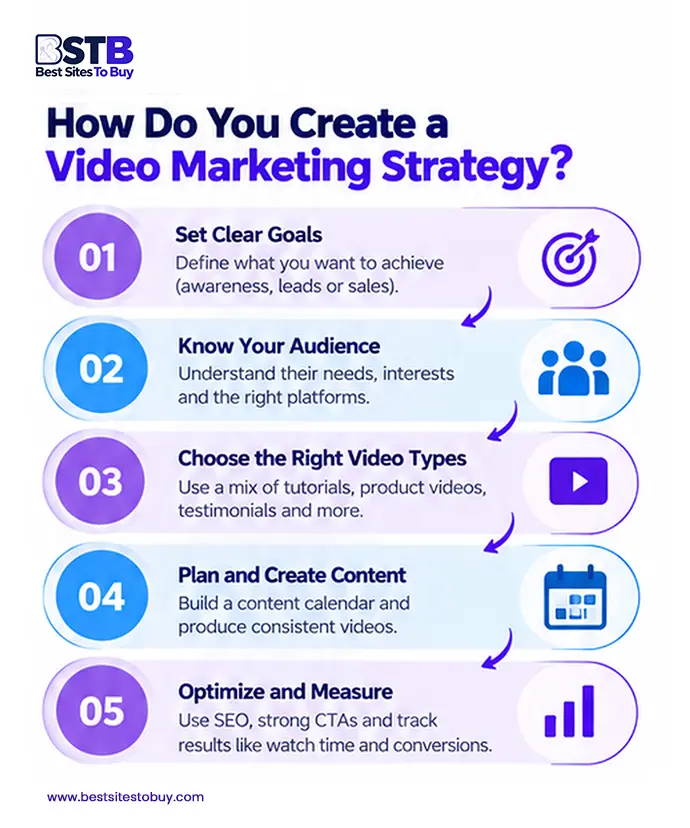
You create a video marketing strategy by setting goals for each funnel stage, defining your audience and message, choosing video types and platforms, setting a budget, planning production and distribution, and measuring results. A clear plan keeps every video focused on a business outcome, not just views.
Start small and build momentum. Many brands begin with one or two video types, such as short social clips and product demos, then expand as they learn what works. Review performance monthly, keep the videos that convert and adjust your video content marketing strategy based on real data.
- Goals: match each video to awareness, consideration, conversion or loyalty.
- Audience: know their problems, questions and favorite platforms.
- Budget and production: plan resources before filming.
- Distribution and measurement: publish widely and track results.
How Do You Set Video Marketing Goals for Each Funnel Stage?
Set video marketing goals by matching each funnel stage to one clear metric. Awareness videos aim for reach, consideration videos for watch time, and conversion videos for clicks and sales.
- Awareness: views, reach and new followers.
- Consideration: watch time, saves and website visits.
- Conversion and loyalty: leads, sales and repeat purchases.
How Do You Define the Audience and Message for Video Marketing?
Define your video marketing audience by researching their pain points, questions and preferred platforms, then craft one simple message each video should communicate clearly within the first few seconds.
- Pain points: what problem does your viewer want solved?
- Message: one key takeaway per video.
- Tone: match your brand voice and audience style.
How Do You Set a Video Marketing Budget?
Set a video marketing budget by deciding how many videos you need, what quality each requires and how much paid promotion you will add. Smartphone and AI tools keep starter budgets low.
- In-house: phone, lighting, microphone and editing apps.
- Freelancers or agencies: for polished brand and ad videos.
- Promotion: reserve budget for boosting top videos.
How Do You Plan Video Marketing Production?
Plan video marketing production in three stages: pre-production for scripts and storyboards, production for filming, and post-production for editing, captions and graphics. Planning saves time and keeps quality consistent.
- Pre-production: script, storyboard, shot list and location.
- Production: film with good light and clear audio.
- Post-production: edit, add captions, music and branding.
How Do You Plan Video Marketing Distribution and Repurposing?
Plan video marketing distribution by choosing primary platforms for each video, then repurposing one long video into short clips, quotes, blog embeds and email content to reach more people.
- Primary channel: where your audience watches most.
- Repurpose: turn one webinar into 10 short clips.
- Schedule: publish consistently with a content calendar.
Which Platforms Are Best for Video Marketing?
The best platforms for video marketing are YouTube for search and long-form content, Instagram Reels and TikTok for short-form reach, LinkedIn for B2B audiences, and email and website landing pages for conversions. The right mix depends on where your audience spends time.
Each platform rewards different formats. YouTube favors searchable, helpful videos, Reels and TikTok reward fast hooks and trends, and LinkedIn rewards professional insights. Adapt aspect ratio, length and captions for each platform, rather than posting the same file everywhere without changes.
- YouTube: long-form, tutorials and search traffic.
- Instagram and TikTok: short-form discovery and trends.
- LinkedIn: B2B thought leadership and case studies.
- Email and website: demos and testimonials that convert.
How Does YouTube Video Marketing Work?
YouTube video marketing works by publishing searchable, helpful videos that answer questions in your niche. YouTube is also a search engine, so optimized titles and descriptions bring views for years.
- Search intent: target questions people type into YouTube.
- Thumbnails: clear faces and bold text improve clicks.
- Playlists: keep viewers watching more of your videos.
How Does Short-Form Video Marketing Work on Instagram and TikTok?
Short-form video marketing on Instagram Reels and TikTok uses quick vertical clips with strong hooks, trending audio and captions to reach new audiences who do not follow you yet.
- Hook: grab attention in three seconds.
- Captions: most viewers watch without sound.
- Consistency: post several short videos every week.
How Does LinkedIn and B2B Video Marketing Work?
LinkedIn and B2B video marketing uses expert insights, case studies, product demos and webinars to reach decision-makers. Videos build trust during long buying cycles and support sales conversations directly.
- Thought leadership: short expert takes on industry trends.
- Case studies: proof for business buyers.
- Sales videos: personalized messages to prospects.
How Does Video Email Marketing Work?
Video email marketing adds a video thumbnail or link to emails to increase clicks and engagement. Personalized videos in sales and onboarding emails make messages feel more human and memorable.
- Thumbnail with play button: links to the full video.
- Personalized videos: greet prospects by name.
- Use cases: onboarding, launches and follow-ups.
How Does Video Marketing Help SEO?
Video marketing helps SEO by keeping visitors on your pages longer, earning video results in Google search, ranking on YouTube and attracting backlinks and shares. Pages with relevant videos often give searchers a richer answer, which supports better engagement signals.
To get SEO value from video, treat every video like a piece of searchable content. Research the keywords people use, add those terms naturally to titles and descriptions, include transcripts and embed videos on related blog posts. This makes your video marketing SEO work across both Google and YouTube.
- Engagement: videos can increase time spent on a page.
- Video results: Google shows videos for many searches.
- YouTube rankings: the platform works as its own search engine.
- Backlinks: useful videos get shared and linked.
How Do You Optimize Marketing Videos for Google and YouTube Search?
Optimize marketing videos for search with keyword-rich titles, detailed descriptions, transcripts, chapters, custom thumbnails and video schema on your website, so search engines understand and rank your content.
- Title and description: include your main keyword naturally.
- Transcripts and chapters: help search engines read the video.
- Schema markup: add VideoObject schema to embedded videos.
How Do You Make a Marketing Video?
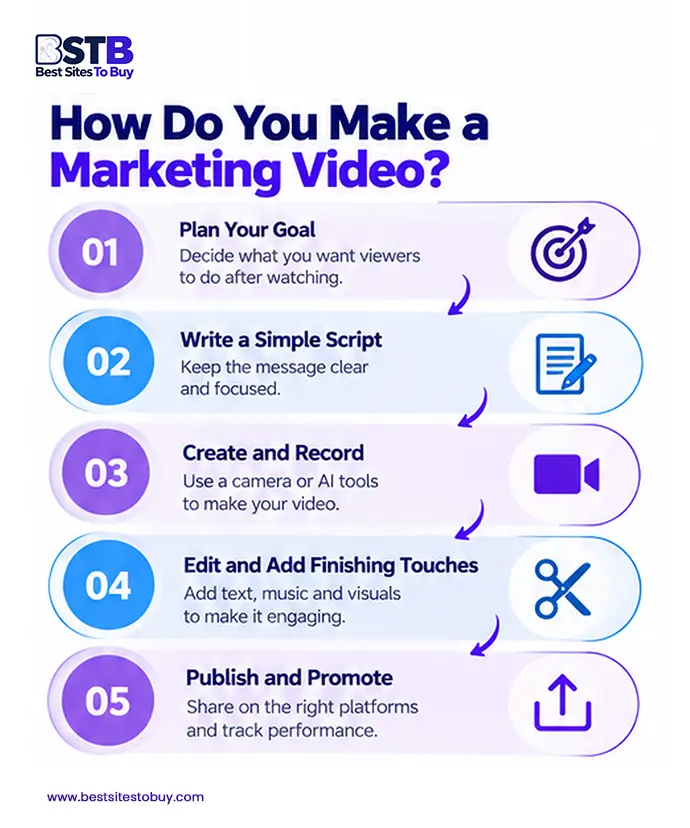
You make a marketing video by choosing one goal, writing a short script, filming with good light and clear audio, editing tightly, adding captions and ending with a clear call to action. Modern phones and editing apps are enough for most social and product videos.
Keep the first three seconds strong, because most viewers decide quickly whether to keep watching. Show the result or problem upfront, keep scenes short and focus on one message. Tools like Descript and Submagic speed up editing and captions for every platform.
- Plan: one goal, one message, one call to action.
- Film: natural light, steady camera and a good microphone.
- Edit: cut pauses, add captions, music and branding.
- Publish: resize for each platform and add a strong thumbnail.
How Do You Measure Video Marketing ROI?
You measure video marketing ROI by comparing the results your videos drive, such as leads, sales and saved support time, against the cost of producing and promoting them. Track performance by funnel stage, so each video is judged on the goal it was made for.
Use platform analytics alongside your website and CRM data. UTM links, landing page tracking and promo codes connect video views to real conversions. Review results monthly, double down on videos with the best return and refresh or retire videos that consistently underperform.
- Costs: production, tools, talent and paid promotion.
- Returns: leads, sales, sign-ups and retention.
- Tracking: UTM links, promo codes and CRM attribution.
- Review: compare ROI by video type and platform.
Which Video Marketing Metrics Matter Most?
The video marketing metrics that matter most are watch time, view count, play rate, engagement rate, click-through rate and conversions, because together they show reach, interest and real business impact.
- Watch time and retention: how long people keep watching.
- Engagement and shares: likes, comments and sends.
- Click-through and conversions: actions after watching.
How Much Does Video Marketing Cost?
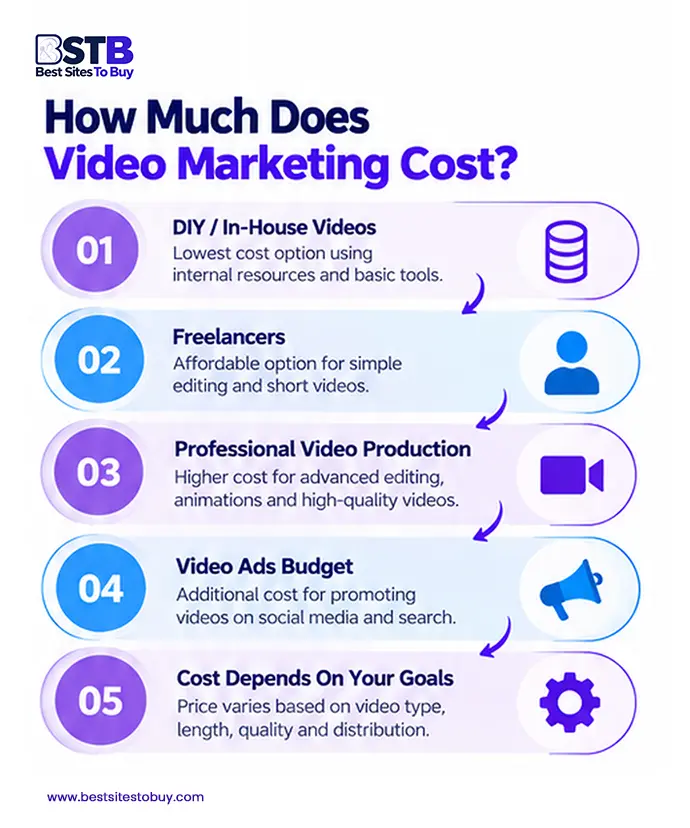
Video marketing can cost almost nothing or several thousand dollars per video, depending on production quality, length, animation, talent and paid promotion. A smartphone, basic lighting and AI editing tools can produce strong social videos on a very small budget.
Professional brand films, animated explainers and TV-style ads cost more because they need scripts, crews, actors and post-production. Most businesses mix both approaches: low-cost, frequent social videos for reach and a few higher-budget videos for key landing pages, launches and ads.
| Video marketing approach | Typical cost level | Best for |
|---|---|---|
| DIY with phone and AI tools | Very low | Social clips, tips, behind-the-scenes |
| Freelancer or UGC creator | Low to medium | Product videos, UGC ads, testimonials |
| Video marketing agency | Medium to high | Brand films, explainers, campaigns |
| Paid promotion | Flexible budget | Boosting top-performing videos |
- DIY: phone, microphone, lighting and editing apps.
- Freelancers and creators: affordable polished content.
- Agencies: compare marketing agencies for bigger campaigns.
Which Video Marketing Tools Should You Use?
The best video marketing tools help you script, edit, caption, repurpose, schedule and analyze videos. AI tools now handle many time-consuming steps, which is why Wyzowl found 63% of video marketers have used AI video tools to create or edit their marketing videos.
Start with one tool for each stage, then add more as your video output grows. Compare features and pricing on our AI tools and social media tools pages, so you only pay for software that saves your team real time each week.
| Tool | Best for |
|---|---|
| ChatGPT | Video ideas, hooks and scripts |
| Descript | Text-based video and podcast editing |
| Opus Clip | Turning long videos into short clips |
| Submagic | Automatic captions and short-form edits |
| Later and Buffer | Scheduling videos across platforms |
| Metricool and Sprout Social | Video analytics and reporting |
- Scripting: AI writing tools for ideas and outlines.
- Editing: AI editors for cuts, captions and resizing.
- Scheduling and analytics: plan, publish and measure.
How Is AI Changing Video Marketing?
AI is changing video marketing by speeding up scripting, editing, captioning, translation and repurposing, so small teams can create more videos in less time without large production budgets.
- Faster editing: remove pauses and filler words automatically.
- Repurposing: turn one long video into many clips.
- Localization: add subtitles and translations quickly.
What Are the Top Video Marketing Trends for 2026?
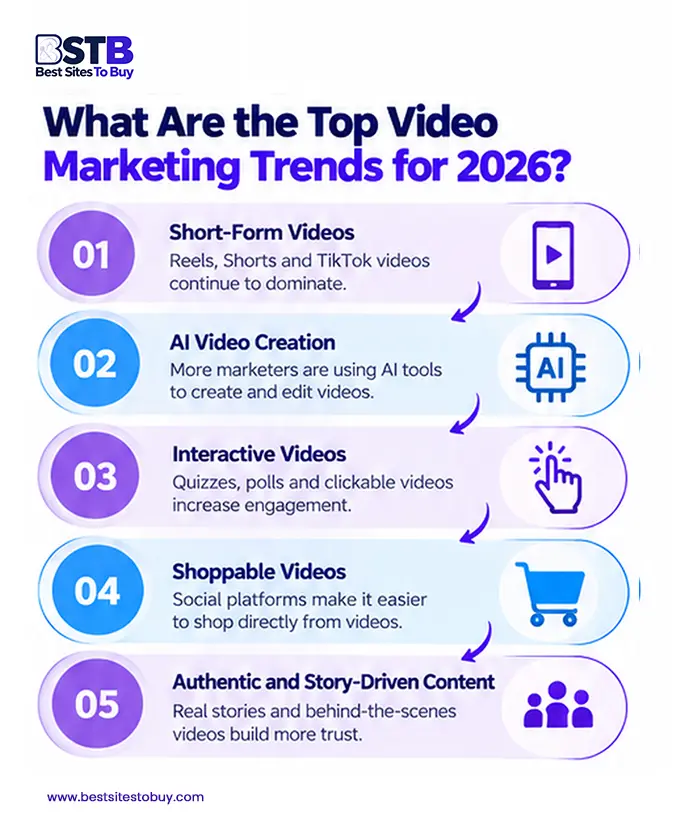
The top video marketing trends for 2026 include short-form video everywhere, AI-assisted production, authentic creator and UGC content, searchable video for SEO, and shoppable or interactive videos. Brands are focusing on faster, more personal videos instead of a few expensive productions.
Personalization and repurposing are also growing. Sales teams send personalized videos to prospects, and marketers turn webinars and podcasts into dozens of short clips. Captions are standard, because many viewers watch without sound, and vertical video is now the default format for social media.
- Short-form first: Reels, TikTok and Shorts dominate reach.
- AI production: faster scripts, edits and captions.
- UGC and creators: authentic videos build trust.
- Search and shopping: video SEO and shoppable formats grow.
How Should Small Businesses Start With Video Marketing?
Small businesses should start video marketing with simple, low-cost videos that answer customer questions: product demos, quick tips, behind-the-scenes clips and customer testimonials. A smartphone, natural light and a free or low-cost editing app are honestly enough to begin today.
Focus on one or two platforms where your customers already spend time, and post consistently. Track which videos bring calls, messages or sales, then make more of those. Small business video marketing works best when it feels personal, local and genuinely helpful.
- Start simple: phone, natural light and captions.
- Answer questions: turn common FAQs into short videos.
- Show people: owners and staff build local trust.
- Stay consistent: post weekly on one or two platforms.
What Are Some Great Video Marketing Examples?
Great video marketing examples include product demos that show results, customer testimonials with real numbers, how-to series that answer common questions and behind-the-scenes clips that show company culture. The best examples focus on viewer value first and the brand second.
You can find inspiration by studying brands in your niche on YouTube, Instagram and LinkedIn. Note their hooks, video length, captions and calls to action. Then adapt those patterns to your own products and audience, rather than copying any single campaign directly.
- Demo: “See it in action in 60 seconds.”
- Testimonial: a customer explains a specific result.
- Series: weekly tips that viewers return for.
- Behind the scenes: how your product is made.
What Are the Best Video Marketing Tips and Mistakes to Avoid?
The best video marketing tips are to hook viewers fast, keep videos short, add captions, use one clear call to action and tailor each video to its platform. The biggest mistakes are skipping strategy, ignoring analytics and making videos that only talk about the brand.
Consistency matters more than perfection. Publishing helpful videos regularly builds an audience faster than waiting months for one perfect production. Review your data, test different hooks and thumbnails, and keep improving each new video based on what your audience watches and shares.
- Do: strong hooks, captions and clear calls to action.
- Do: optimize titles and descriptions for search.
- Avoid: long intros and overly promotional messages.
- Avoid: posting the same format everywhere without changes.
Conclusion: Start Your Video Marketing Strategy Today
Video marketing works best when every video has a clear goal, the right format for its platform and a simple way to measure results. Start with a few short videos, learn from your analytics and build a consistent video marketing strategy that grows with your business.
If you want to compare AI video editors, schedulers and marketing tools before you invest, BestSitesToBuy brings trusted reviews and options together in one place, so you can create, publish and measure your videos with confidence.